The Impact of Cloud Computing on Agriculture Revolutionizing Farming
The Impact of Cloud Computing on Agriculture is transforming how farmers operate, manage data, and increase efficiency. From streamlining operations and optimizing resource use to boosting data analysis and enabling precision agriculture, cloud technology is revolutionizing the industry. Imagine a world where farmers have real-time insights into their crops, soil, and weather patterns, all thanks to the power of the cloud.
This is no longer a futuristic dream, but a tangible reality reshaping the landscape of modern agriculture.
This exploration delves into the core principles of cloud computing in agriculture, examining how it’s changing data management, enabling automation, and ultimately improving efficiency and cost reduction. We’ll also touch upon critical considerations like security and privacy, alongside emerging trends and technologies that are set to shape the future of farming.
Introduction to Cloud Computing in Agriculture
Cloud computing is revolutionizing the agricultural sector, enabling farmers and agricultural businesses to leverage powerful tools and technologies previously inaccessible due to cost or complexity. This shift empowers them to make data-driven decisions, optimize resource utilization, and enhance overall operational efficiency. By moving away from traditional on-premises systems, farmers can access scalable computing resources, specialized software, and vast datasets, transforming their approaches to farming.Cloud computing in agriculture leverages the internet to deliver computing resources—servers, storage, databases, networking, software, analytics, and intelligence—on-demand.
This flexibility allows farmers to access the resources they need, when they need them, without the need for significant upfront investments in hardware or software. This agility is a key differentiator, allowing farms to scale their operations as their needs evolve. The core principles behind cloud-based solutions are scalability, accessibility, and cost-effectiveness.
Core Principles and Benefits of Cloud Computing
Cloud computing offers a range of benefits for agricultural practices. Scalability allows farmers to adjust computing resources up or down based on their needs, avoiding overspending during peak seasons and ensuring adequate resources during crucial stages. Accessibility enables farmers to access data and applications from anywhere with an internet connection, facilitating remote monitoring, management, and analysis. Cost-effectiveness reduces upfront investments in hardware and software, while providing pay-as-you-go pricing models that align with operational budgets.
Farmers can focus on their core operations, knowing that their data and applications are securely managed and maintained by the cloud provider.
Different Types of Cloud Services
Cloud services cater to diverse needs in agriculture. Infrastructure as a Service (IaaS) provides fundamental computing resources like virtual servers, storage, and networks, allowing farmers to build their own customized environments. Platform as a Service (PaaS) offers a platform for developing, running, and managing applications, simplifying the deployment of specialized agricultural software. Software as a Service (SaaS) delivers ready-to-use applications, such as crop management software, weather forecasting tools, and data analytics platforms, requiring minimal technical expertise.
These services are readily available and offer a variety of options to suit different budgets and technical capabilities.
Enhancement of Data Management
Cloud computing enhances data management in farming by centralizing and organizing data from various sources. This includes weather patterns, soil conditions, crop yields, and livestock data. The centralized storage allows for seamless data access, analysis, and sharing across different departments or stakeholders. Real-time data analysis provides valuable insights into operational efficiency, enabling farmers to make informed decisions about irrigation, fertilization, and pest control.
Improved data management also facilitates better risk management and forecasting, which can be crucial in unpredictable weather patterns.
Comparison of On-Premises and Cloud-Based Systems
| Feature | On-Premises | Cloud-Based |
|---|---|---|
| Infrastructure Cost | High initial investment in hardware and software | Lower initial investment, pay-as-you-go pricing |
| Scalability | Limited scalability, often requiring significant upgrades | Highly scalable, easily adjust resources |
| Accessibility | Limited access to data and applications, often confined to specific locations | Accessible from anywhere with an internet connection |
| Maintenance | Requires in-house IT expertise for maintenance and updates | Managed by the cloud provider, minimizing in-house technical burden |
| Security | Requires robust security measures to protect data and systems | Leverages advanced security protocols managed by the cloud provider |
| Disaster Recovery | Requires a separate disaster recovery plan | Built-in disaster recovery mechanisms and redundancy |
Data Management and Analysis: The Impact Of Cloud Computing On Agriculture
Cloud computing offers a game-changing approach to managing and analyzing agricultural data. By leveraging cloud storage and powerful analytics tools, farmers can gain deeper insights into their operations, leading to improved efficiency, optimized resource use, and ultimately, higher yields. This shift empowers data-driven decision-making, allowing for proactive adjustments to weather patterns, pest infestations, and other unpredictable factors.Agricultural data is exploding in volume and complexity.
Traditional methods struggle to handle the sheer scale of information generated by sensors, drones, and other modern technologies. Cloud platforms provide the necessary infrastructure to store, process, and analyze this massive dataset, transforming raw information into actionable intelligence. This is crucial for farmers to make informed decisions about everything from planting schedules to irrigation strategies.
Cloud Storage for Data Collection
Cloud storage facilitates the seamless collection of data from diverse agricultural sources. Sensors embedded in fields, livestock, or even individual plants gather real-time data on various parameters. Drones equipped with high-resolution cameras capture aerial imagery for assessing crop health and identifying potential issues. This data, once collected, is stored securely and reliably in the cloud, readily accessible for analysis and interpretation.
The scalable nature of cloud storage ensures that the system can handle increasing volumes of data as technology evolves and new sources are integrated.
Organizing and Managing Large Datasets
Efficient organization and management of agricultural data in the cloud are critical for deriving meaningful insights. Cloud-based platforms employ robust data management systems that categorize and structure data according to specific parameters. This structured approach allows for easy retrieval and analysis, enabling farmers to quickly pinpoint specific information for decision-making. Data is tagged and linked logically to enable complex queries and cross-referencing, allowing for more sophisticated analyses.
Data Analytics for Optimization
Data analytics play a pivotal role in optimizing crop yields and resource utilization. Sophisticated algorithms can analyze historical data, weather patterns, and soil conditions to predict crop performance and recommend optimal planting strategies. Predictive analytics can also be used to identify potential pest outbreaks or disease risks, enabling timely interventions and minimizing crop losses. This proactive approach empowers farmers to anticipate challenges and adjust their strategies accordingly.
Automated Data Analysis for Farmers
Cloud-based platforms can automate many data analysis tasks, streamlining the decision-making process for farmers. Automated reporting tools provide summaries of key metrics, such as crop health, yield forecasts, and resource consumption. These reports can be customized to meet specific needs, enabling farmers to focus on the most critical information. Advanced machine learning algorithms can automatically identify patterns and anomalies, alerting farmers to potential problems before they escalate.
This proactive approach is critical in minimizing crop losses and maximizing profitability.
Data Analysis Tools in Cloud-Based Platforms
| Tool | Functionality | Example Use Cases |
|---|---|---|
| Crop Monitoring Platform | Tracks plant growth, identifies stress indicators, and provides insights into optimal irrigation schedules. | Predicting water needs based on soil moisture levels and weather forecasts. |
| Precision Farming Software | Optimizes fertilizer and pesticide application, identifies areas requiring attention, and enhances yield predictions. | Mapping variable rate fertilizer application based on soil nutrient levels. |
| Livestock Management System | Tracks animal health, monitors feeding patterns, and predicts potential health issues. | Detecting early signs of disease in livestock through automated analysis of body temperature and activity levels. |
| Weather Forecasting Integration | Provides real-time weather data, predicts potential impacts on crops, and generates alerts for extreme weather events. | Adjusting irrigation schedules based on forecasted rainfall. |
Automation and Precision Agriculture
Cloud computing is revolutionizing agriculture, empowering farmers with tools and insights previously unimaginable. By leveraging the scalability and accessibility of the cloud, farmers can now automate tasks, analyze vast datasets, and make data-driven decisions to optimize yields and resource utilization. This leads to increased efficiency, reduced waste, and ultimately, a more sustainable agricultural sector.Cloud-based platforms provide the infrastructure for sophisticated automation, enabling precise control over various farming operations.
This allows farmers to tailor their approach to individual crop needs, maximizing productivity and minimizing environmental impact.
Automated Farming Processes
Cloud platforms streamline farming operations by enabling automation. Automated irrigation systems, for example, adjust water delivery based on real-time soil moisture data, minimizing water waste and optimizing crop health. Similarly, automated fertilization systems can precisely apply nutrients, reducing fertilizer overuse and promoting sustainable practices. These systems, managed through cloud-based software, allow farmers to monitor and adjust these crucial parameters remotely, enhancing efficiency and responsiveness to changing conditions.
Precision Agriculture Techniques
Precision agriculture techniques, enabled by cloud computing, allow for targeted interventions in farming. Variable rate technology (VRT) is a key example. VRT utilizes data from sensors and GPS to tailor inputs (fertilizers, pesticides, and water) to specific areas within a field, ensuring optimal resource utilization. Cloud platforms store and process this data, enabling farmers to identify areas needing particular attention, such as nutrient deficiencies or pest infestations, and apply treatments only where necessary.
Decision-Making in Crop Management
Cloud-based systems provide farmers with the data and tools to make informed decisions regarding crop management. Real-time data analysis allows for proactive adjustments to irrigation, fertilization, and pest control strategies. Historical data, combined with weather forecasts and soil conditions, empowers farmers to predict potential challenges and implement preventive measures. This proactive approach leads to improved yields and reduced risk of crop failure.
Remote Sensing Data in Agricultural Solutions
Remote sensing data, processed and analyzed in the cloud, plays a crucial role in agricultural decision-making. Satellite imagery and aerial photography provide valuable insights into crop health, identifying areas with stress or disease. This data, coupled with weather patterns and soil conditions, enables farmers to anticipate problems and take necessary steps to mitigate them. By analyzing trends in remote sensing data, farmers can identify areas that are more susceptible to certain issues, allowing for targeted interventions.
Drones and Robots in Farming
Cloud computing facilitates the use of drones and robots in farming. Drones equipped with high-resolution cameras and sensors can provide detailed imagery of fields, enabling early detection of issues like crop stress or pest infestations. This data is transmitted to cloud platforms for analysis, allowing farmers to react quickly and effectively. Similarly, cloud-based systems can manage and control robots used for tasks like weeding, harvesting, and spraying, ensuring optimal efficiency and precision.
Cloud platforms enable real-time data exchange and control between the drones and robots and the farming operation, improving operational efficiency.
Improved Efficiency and Cost Reduction
Cloud computing is revolutionizing agricultural practices, promising significant improvements in efficiency and cost reduction. By leveraging scalable resources and automated processes, farmers can optimize operations, reduce manual labor, and ultimately boost profitability. This shift towards digital agriculture is driving a paradigm shift in the industry, allowing for more data-driven decisions and a more sustainable approach to farming.Cloud-based platforms offer a flexible and scalable solution for managing agricultural operations, enabling farmers to access resources and tools on demand.
This adaptability allows them to respond efficiently to fluctuating needs, whether it’s managing seasonal workloads or adapting to changing market demands. This agility translates directly to cost savings and enhanced productivity.
Streamlining Agricultural Operations, The Impact of Cloud Computing on Agriculture
Cloud computing facilitates the automation of many routine tasks, freeing up valuable time and resources for farmers. This automation encompasses everything from crop monitoring and data analysis to irrigation control and pest management. By automating these processes, farmers can focus on higher-level strategic decision-making.
Optimizing Resource Management
Cloud-based solutions offer precise control over crucial resources like water and fertilizers. Sophisticated sensors and data analytics can be deployed to monitor soil conditions, crop health, and water usage in real-time. This data-driven approach allows for precise application of resources, minimizing waste and maximizing yield. For example, a cloud-based irrigation system can adjust water delivery based on real-time soil moisture data, significantly reducing water consumption.
Similarly, variable-rate fertilizer application, guided by soil analysis data, can drastically cut fertilizer costs and reduce environmental impact.
Potential Cost Savings
Adopting cloud-based agricultural technologies can lead to substantial cost savings across various aspects of farming. Reduced labor costs due to automation, minimized resource waste, and increased yields all contribute to a lower overall operational cost. For example, a farm implementing a cloud-based weather forecasting system can optimize planting schedules and irrigation strategies, reducing the risk of crop damage and losses.
Impact on Waste Reduction and Productivity
Cloud computing empowers farmers to make more informed decisions, leading to reduced waste and increased productivity. Real-time data analysis allows farmers to identify issues like pest infestations early, enabling timely interventions. This proactive approach prevents widespread damage and minimizes the need for costly and environmentally damaging treatments. Data insights can also help optimize harvesting schedules, minimizing post-harvest losses.
Comparison of Costs: Cloud-Based vs. Traditional Solutions
| Feature | Cloud-Based Solution | Traditional Solution |
|---|---|---|
| Initial Investment | Lower, often with pay-as-you-go options | Higher, with upfront costs for equipment and infrastructure |
| Maintenance Costs | Lower, managed by the cloud provider | Higher, requiring ongoing maintenance and repairs |
| Scalability | High, easily adaptable to changing needs | Limited, often requiring significant investments for expansion |
| Data Management | Centralized and secure | Decentralized and potentially vulnerable |
| Resource Optimization | Enhanced through data-driven insights | Limited by manual estimations and historical data |
Security and Privacy Concerns
Agricultural data, especially sensitive information about crops, livestock, and soil conditions, is highly valuable. Storing this data in the cloud introduces a new layer of security concerns. Protecting this information is paramount, not only for preventing financial losses but also for maintaining trust and ensuring the long-term sustainability of agricultural practices. Robust security measures are crucial for maintaining data integrity and avoiding disruptions to farming operations.Protecting sensitive agricultural data in cloud environments requires a multifaceted approach.
A combination of strong encryption, access controls, and robust security protocols are essential. The potential for breaches can be significant, ranging from unauthorized access to data manipulation. Effective mitigation strategies must be implemented to prevent and respond to such incidents.
Importance of Data Security and Privacy
Agricultural data often includes proprietary information, including genetic data, crop yields, and specific farming techniques. Protecting this data from unauthorized access is critical for maintaining competitiveness and preventing intellectual property theft. Breaches can expose sensitive information about farming practices, potentially harming the livelihood of farmers and disrupting the supply chain. The confidentiality of data, as well as compliance with relevant regulations, is paramount.
Measures for Protecting Sensitive Agricultural Data
Implementing strong encryption protocols is crucial. Data encryption transforms sensitive information into an unreadable format, making it virtually impossible for unauthorized individuals to access its contents. Access controls, such as strong passwords and multi-factor authentication, are essential to restrict access to authorized personnel only. Regular security audits and vulnerability assessments are vital for identifying and addressing potential security gaps in cloud systems.
These steps can help prevent unauthorized access, ensure data integrity, and protect sensitive information from cyber threats.
Role of Encryption and Access Controls
Data encryption, using advanced algorithms, ensures confidentiality of sensitive agricultural data in transit and at rest. This method renders the data useless to unauthorized parties. Access controls, based on a principle of least privilege, define what users can do with the data. This approach restricts access to only those with legitimate needs, minimizing the risk of unauthorized access or manipulation.
Examples of Potential Security Breaches and Mitigation Strategies
A potential breach could involve a malicious actor gaining unauthorized access to cloud storage. This could expose confidential data, such as crop varieties, yield projections, or proprietary farming techniques. A mitigation strategy includes employing robust encryption and access controls, along with regular security assessments. Another potential breach involves insider threats, where authorized personnel misuse their access privileges.
Mitigation strategies include implementing strict access controls and monitoring user activities.
Security Best Practices for Agricultural Data
- Employ strong encryption algorithms for data at rest and in transit. Data encryption should be an integral part of the data storage and transfer processes.
- Implement multi-factor authentication for all users accessing cloud-based agricultural data systems. This adds an extra layer of security, preventing unauthorized access.
- Regularly update security software and systems to address known vulnerabilities. Staying up-to-date on security patches is essential to protect against known threats.
- Conduct regular security audits and vulnerability assessments to identify and address potential security weaknesses. Proactive security measures are key to preventing breaches.
- Establish clear data access policies and procedures. Explicitly defining who can access what data helps maintain control and reduces the risk of unauthorized access.
- Implement incident response plans to effectively handle security breaches. Having a plan in place to respond to incidents is crucial for minimizing the impact of a breach.
Future Trends and Emerging Technologies
Cloud computing is rapidly transforming agriculture, and the future holds even more exciting possibilities. The integration of cutting-edge technologies like Artificial Intelligence, Machine Learning, and the Internet of Things (IoT) is poised to revolutionize farming practices, leading to increased efficiency, reduced costs, and enhanced food security. This evolution will be driven by the ability of cloud platforms to handle massive datasets, enabling sophisticated analysis and automation.The potential of these advancements extends far beyond simple data management.
By leveraging AI and ML, farmers can make more informed decisions about everything from crop selection to resource allocation. The integration of IoT sensors will provide real-time insights into environmental conditions and crop health, enabling proactive interventions and optimized resource utilization. This integration, coupled with blockchain’s potential for secure and transparent supply chain management, is set to reshape the agricultural landscape.
Artificial Intelligence and Machine Learning in Agriculture
AI and ML are poised to revolutionize agricultural decision-making. These technologies can analyze vast amounts of data from various sources, including weather patterns, soil conditions, and historical yield data, to predict optimal planting times, irrigation schedules, and fertilizer application rates. For example, AI algorithms can identify patterns in disease outbreaks, allowing for targeted interventions and minimizing crop loss.
This data-driven approach significantly improves the efficiency and precision of agricultural practices.
Internet of Things (IoT) Integration for Enhanced Monitoring
IoT devices are transforming agricultural monitoring by providing real-time data on various factors impacting crop growth. Sensors embedded in fields and on equipment can collect data on temperature, humidity, soil moisture, and even plant health. This continuous data stream allows farmers to monitor conditions remotely, adjust irrigation, and apply pesticides precisely, reducing waste and maximizing yields. This integration allows for a proactive approach to challenges, minimizing losses and optimizing resource use.
For instance, sensors detecting early signs of disease can trigger automated interventions, saving time and resources.
Cloud computing’s impact on agriculture is huge, enabling data-driven insights and efficient resource management. Crucially, this data fuels advancements like AI in pest detection, revolutionizing agricultural practices. AI in Pest Detection: Revolutionizing Agriculture with Advanced Technology is a game-changer, and this technology, in turn, further enhances the overall efficiency and profitability of cloud-based agricultural operations.
Blockchain Technology in Agricultural Supply Chains
Blockchain technology offers the potential to enhance transparency and traceability throughout the agricultural supply chain. By recording every stage of a product’s journey – from farm to consumer – on a secure, immutable ledger, blockchain can verify authenticity, reduce fraud, and build consumer trust. This increased transparency can foster better relationships between farmers, suppliers, and consumers. A notable example of blockchain application in agriculture is the tracking of specific produce throughout the supply chain, verifying its origin and journey.
Integration of Technologies in the Cloud
The convergence of AI, ML, IoT, and blockchain is creating a powerful synergy for agricultural advancement. These technologies can be integrated seamlessly on cloud platforms, offering unprecedented opportunities for data analysis, automation, and decision-making. The cloud acts as a central hub for data collection, processing, and sharing, empowering farmers to access real-time insights and make data-driven decisions.
Cloud computing’s impact on agriculture is profound, enabling data-driven insights and precision farming. This directly correlates to the rise of smart factories, like those detailed in the fascinating article “IoT in Production: From Manual to Marvel – The Rise of Smart Factories” IoT in Production: From Manual to Marvel – The Rise of Smart Factories. Ultimately, these advancements in technology are boosting efficiency and yield, revolutionizing the entire agricultural process.
| Technology | Application in Cloud-Based Agriculture | Impact |
|---|---|---|
| Artificial Intelligence (AI) | Predictive modeling, crop health analysis, automated decision support | Improved efficiency, reduced risk, optimized resource allocation |
| Machine Learning (ML) | Pattern recognition, anomaly detection, targeted interventions | Enhanced precision, reduced waste, improved yield |
| Internet of Things (IoT) | Real-time environmental monitoring, remote asset management | Proactive management, optimized resource use, reduced labor |
| Blockchain | Secure and transparent supply chain management, product traceability | Enhanced transparency, reduced fraud, increased trust |
Case Studies and Examples
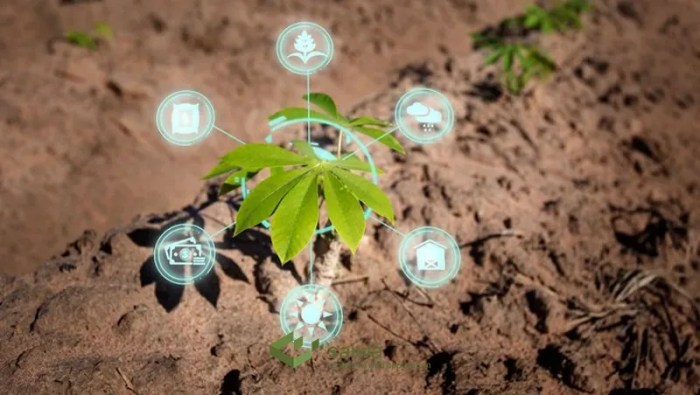
Cloud computing’s impact on agriculture isn’t theoretical; it’s happening now, transforming farms globally. Real-world examples demonstrate how cloud platforms are boosting efficiency, precision, and profitability. From small-scale operations to large-scale agribusinesses, the benefits are evident. This section dives deep into successful implementations, highlighting the key factors behind their success.Successful cloud adoption in agriculture isn’t a one-size-fits-all solution.
Factors like farm size, existing infrastructure, and specific agricultural challenges play crucial roles. This section showcases various scenarios, illustrating how adaptable cloud technology can be to different farming contexts.
Successful Implementations in Diverse Farm Settings
Cloud platforms are proving invaluable in various agricultural contexts. From optimizing irrigation schedules to enhancing crop monitoring, these platforms are transforming how farmers manage their operations. This adaptability is a key driver of their widespread adoption.
- Precision Irrigation: A California vineyard successfully implemented a cloud-based system for irrigation management. Real-time soil moisture data collected via sensors was uploaded to the cloud, allowing the system to automatically adjust irrigation based on precise needs. This reduced water usage by 20% and increased yield by 15%. The scalability of the cloud platform allowed the system to expand to multiple vineyards in the region, further increasing its impact.
- Crop Monitoring and Disease Detection: A large-scale wheat farm in Kansas uses cloud-based image analysis to detect crop diseases early. Drone imagery is processed in the cloud, highlighting areas with potential disease issues. Early detection allows for targeted interventions, minimizing yield losses. This early detection is crucial, as it can prevent significant economic losses.
- Livestock Management: A dairy farm in New Zealand utilizes cloud-based systems for tracking animal health and productivity. Sensors attached to cows provide real-time data on factors like activity levels, milk production, and body temperature. The farm’s farm management software provides insights into overall herd health, enabling proactive interventions to maintain optimal animal well-being and boost overall production.
Factors Contributing to Successful Cloud Adoption
Several factors influence the success of cloud adoption in agriculture. These factors encompass technical aspects, operational considerations, and the strategic vision of the farm.
- Data Integration: Seamless integration of existing farm data with cloud platforms is crucial. This ensures historical data is accessible and allows for continuous improvement in farm practices.
- Training and Expertise: Effective training programs for farm staff on cloud platforms are vital. This ensures the full potential of the technology is realized and allows for ongoing improvements in productivity.
- Scalability and Flexibility: The ability of the cloud platform to scale with the farm’s growth is essential. This ensures that the system can adapt to future needs and maintain its effectiveness.
Challenges and Considerations in Cloud Adoption
While cloud computing offers significant benefits, challenges remain. Security concerns and data privacy considerations are paramount. A robust security strategy is necessary to protect sensitive farm data.
- Data Security: Implementing robust security measures to protect sensitive farm data is crucial. This includes encryption, access controls, and regular security audits.
- Connectivity: Reliable internet connectivity is essential for seamless data transfer and platform access. This is particularly important for remote areas or farms with limited infrastructure.
- Cost Management: Careful planning and monitoring of cloud costs are vital. Understanding usage patterns and implementing appropriate cost control measures are critical.
Final Wrap-Up
In conclusion, the integration of cloud computing in agriculture offers a compelling pathway to a more sustainable and productive future. From enhanced data analysis to automated processes, the possibilities are vast. However, successful implementation requires careful consideration of security and privacy concerns. As the technology continues to evolve, the future of farming promises to be more data-driven, automated, and efficient than ever before.
The benefits are clear – from increased yields to reduced waste and operational costs – ultimately making farming more resilient and profitable in the long term.